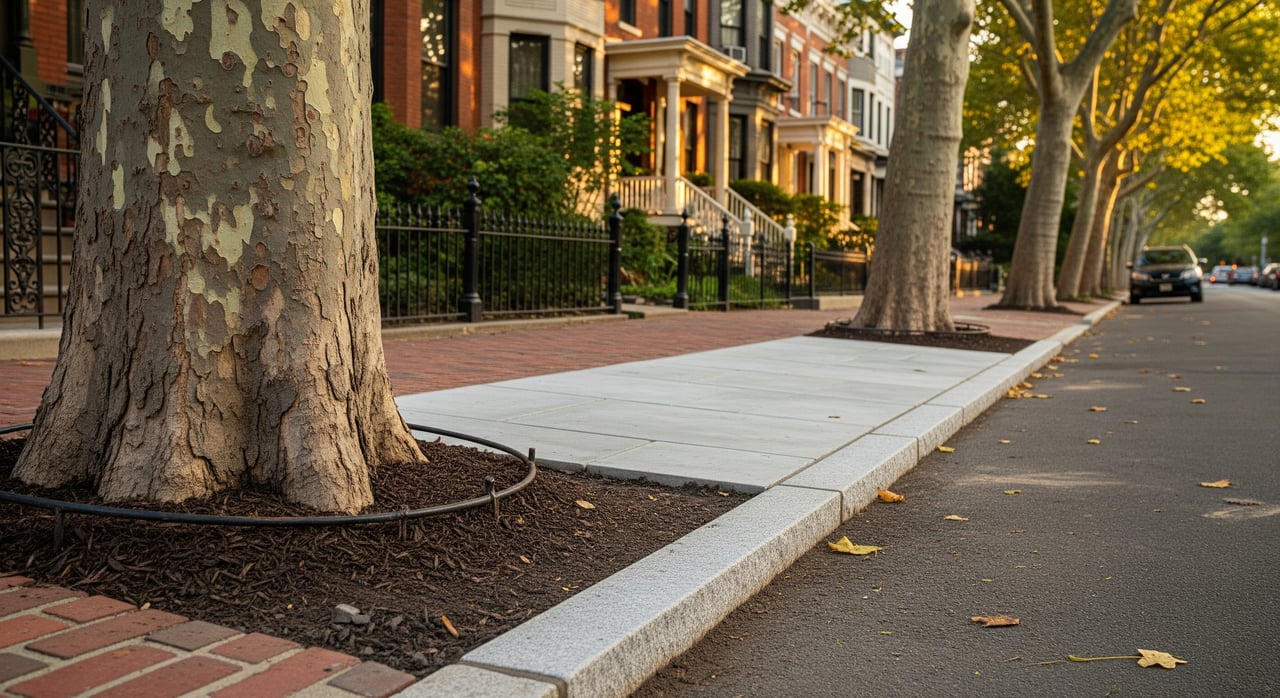
Have you noticed a sidewalk slab near your street tree lifting or cracking? You are not alone in Staten Island. Street trees add charm and shade, but their roots can push up concrete and create trip hazards that put you at risk for violations. In this guide, you will learn who is responsible, how to document the issue, what repair options you have, and how to navigate permits and inspections so you can fix the problem with less stress. Let’s dive in.
Who fixes what in Staten Island
In New York City, property owners are generally responsible for maintaining the sidewalk that borders their property. That includes fixing uneven slabs and other hazards. If a sidewalk is unsafe, inspectors can issue a violation and set a deadline to correct it.
Several city agencies play a role:
- NYC Parks manages street trees. You cannot prune, remove, or cut roots on a street tree without Parks authorization. Review tree rules and requests on the NYC Parks street trees pages.
- NYC Department of Transportation (DOT) oversees work in the public right-of-way, including sidewalk work permits and safety standards for construction.
- NYC Department of Buildings (DOB) enforces certain unsafe conditions and coordinates on violations.
- 311 is the city’s intake for reporting hazardous sidewalks and tree concerns. Creating a 311 record helps trigger inspections and keeps your documentation organized.
Learn more and start with the official resources: use the NYC 311 portal, review NYC Parks street tree guidance, check DOT’s sidewalk permits information, and see DOB’s pages on resolving violations.
Confirm the cause and document it
Before you call a contractor or the city, gather clear documentation. This helps you get faster answers and better bids.
- Photos: Take wide shots of the house, curb, and tree, plus close-ups of cracks or lifted edges. Use a ruler or tape for scale.
- Measurements: Note height differences, length of the affected area, and how close the issue is to the tree trunk.
- Timing: Write down when you first noticed the change and whether it is getting worse. Note any recent nearby work like utilities or driveway changes.
- Tree details: Species if known, trunk diameter, distance from the slab, exposed roots, or signs of stress.
- Safety incidents: Record any trips or near-misses.
Bring this information when you call 311 or speak with a contractor. It can speed inspections and reduce back-and-forth.
Repair options near street trees
Your goal is a safe, even sidewalk that lasts while protecting the tree. Here are the common paths, with pros and cons to help you decide.
Full slab replacement
- What it is: Remove damaged panels and pour new concrete to public sidewalk standards.
- Pros: Durable, restores a level walking surface, straightforward for most contractors.
- Cons: Roots can re-lift slabs later if you do not address them. Cutting roots can harm the tree and must be approved by Parks. Permits are usually required.
Replace slabs with root barriers
- What it is: Install a root barrier between the tree and sidewalk during replacement.
- Pros: Helps reduce future lifting. Can preserve tree roots when designed and installed correctly.
- Cons: Needs careful design, especially near the trunk. Often requires Parks input and approval.
Modified designs or flexible materials
- Options: Reinforced or thicker concrete panels, engineered slabs, interlocking pavers with flexible joints, or rubberized panels near trees.
- Pros: Allow some movement, which can reduce re-lifting. Can look clean and consistent.
- Cons: DOT standards limit what materials are allowed in the public right-of-way. You may need an engineered design and a permit.
Selective root pruning
- What it is: Cut or remove specific roots causing the lift.
- Pros: Targets the cause directly.
- Cons: Can injure or destabilize a tree. Root work on street trees requires authorization from NYC Parks.
Grinding or small ramps
- What it is: Mechanically grind high spots or add a tapered ramp to smooth minor height differences.
- Pros: Fast and lower cost for small issues.
- Cons: Often temporary and suitable only for minor lifts. Does not address the underlying root pressure.
Tree-centric solutions
- What it is: In cases of repeated damage, coordinate removal and replanting with a more suitable species and better planting practices.
- Pros: Long-term resolution when a tree and sidewalk conflict is severe.
- Cons: Requires Parks approval and community sensitivity. Replacement trees take time to mature.
Permits and coordination with the city
Sidewalk work and any tree-related work require planning and the right permits. A typical coordinated repair looks like this:
- Document the issue and create an official record by reporting it via NYC 311.
- Consult NYC Parks before any work near the tree. Review NYC Parks street tree rules and requests.
- Hire a contractor who works in Staten Island and knows DOT/DOB permitting. Your contractor usually applies for DOT sidewalk work permits and coordinates any DOB filings if needed. See DOT’s sidewalk permits information.
- If root work is needed, obtain Parks authorization before cutting roots or altering the tree.
- Complete work under permit with proper pedestrian protection. Agencies may inspect before or after work.
- Keep all permits, approvals, and final sign-offs. These documents help clear or contest violations later.
If you receive a violation, the notice will list what to fix and by when. You typically clear it by making repairs under permit and getting final sign-offs. If the city performs emergency work and bills you, unpaid costs can escalate. Use DOB’s resources to understand how to resolve or appeal violations, and track deadlines closely.
Timeline and cost basics
Every case is different, but most Staten Island homeowners can expect:
- 311 report and documentation: same day to 1 week.
- Parks or DOT inspections: a few days to several weeks depending on workload.
- Contractor bids and permit applications: 1 to 4 weeks.
- Permit approvals: days to several weeks. Complex jobs take longer.
- Construction: 1 to 3 days for a few panels, longer for larger areas or tree mitigation.
- Final inspections and sign-offs: days to weeks after completion.
Costs vary with the size of the repair, need for root barriers or engineered solutions, permit fees, and any required tree work. Get at least two written estimates. Ask for itemized pricing that includes permit fees, inspections, pedestrian protection, and restoration of any planting strips.
Staten Island homeowner checklist
- Photograph and measure the problem. Note dates and any safety incidents.
- Create an official record by reporting hazards to NYC 311.
- Contact NYC Parks before any tree or root work. Do not prune or remove a street tree without authorization.
- Get written quotes from contractors experienced in NYC sidewalk and tree-adjacent work.
- Confirm your contractor will secure DOT permits and handle DOB filings if needed.
- Keep copies of permits, approvals, invoices, and final sign-offs.
- If you receive a violation, follow the correction instructions promptly and use DOB guidance to resolve or appeal as appropriate.
Avoid common mistakes
- Skipping Parks approval for root cutting or pruning. This can lead to penalties and harm the tree.
- Starting work without DOT permits. Unpermitted work can result in stop-work orders and fines.
- Ignoring small lifts. Minor problems often grow, increasing risk and cost.
- Choosing a fix that ignores the tree. Without root management, new slabs may lift again.
Ready to plan your repair?
If you are deciding whether to repair now, wait, or explore a sale, you deserve clear next steps and local context. Our team helps Staten Island owners understand timelines, costs, and compliance so you can move forward with confidence. Connect with Revived Residential to talk through your options or Get Your Instant Home Valuation.
FAQs
Who is responsible for sidewalk repair next to a street tree in Staten Island?
- In NYC, the property owner is generally responsible for maintaining the sidewalk abutting the property, even when a street tree contributes to damage.
How do I report a hazardous sidewalk or tree issue in Staten Island?
- Create an official record through the NYC 311 portal and request the appropriate inspection.
Do I need permits to replace sidewalk slabs near a street tree?
- Yes, sidewalk work usually needs DOT permits, and any pruning, root work, or tree removal requires authorization from NYC Parks.
Can I cut roots that are lifting my sidewalk?
- Not without NYC Parks authorization for street trees; unauthorized root cutting can damage the tree and lead to enforcement.
What happens if I receive a sidewalk violation in NYC?
- The notice will list corrections and a deadline; you cure it by completing permitted repairs and obtaining final sign-offs, or you can use DOB guidance to appeal when allowed.
How long does a typical sidewalk repair take from start to finish?
- Simple projects can wrap in a few weeks including permits; more complex jobs with tree mitigation can take longer due to inspections and approvals.