Marine Park Brooklyn Real Estate With Single-Family Value
March 5, 2026
March 5, 2026
You want a real backyard, a quiet block, and a price that still makes sense in Brooklyn. Marine Park might be the rare mix you are looking for. It offers single-family living, a huge park, and prices that often come in below nearby waterfront enclaves. In this guide, you will learn what homes look like here, what they cost, how the commute and amenities feel day to day, and the due diligence that helps you buy with confidence. Let’s dive in.
Marine Park reads as a low-density, suburban-feeling pocket of southeast Brooklyn with tree-lined streets and a neighborhood pace. It sits between Flatlands and Mill Basin to the west and Sheepshead Bay and Gerritsen Beach to the east, largely within ZIP codes 11229 and 11234. Blocks are quiet, turnover is lower, and single-family homes are common.
For pricing, neighborhood indexes point to a typical home value in roughly the mid-to-high $700Ks to low $800Ks. Recent figures show a modeled neighborhood value near about $825K on index measures and a closed-sale median closer to about $780K. You should expect some spread across data sources. In practice, single-family listings tend to trade from around $600K for smaller or estate-condition homes to $1.3M and above for wider lots or turnkey renovations.
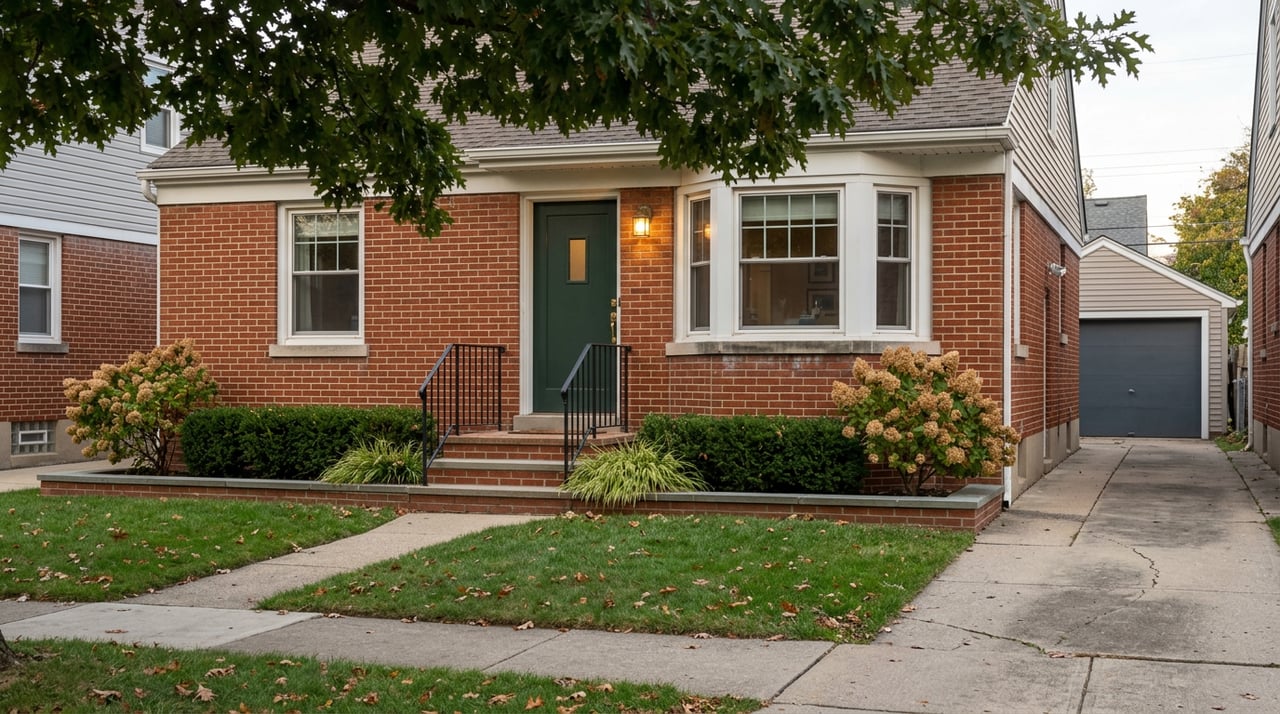
A big reason Marine Park feels like a value play is its housing stock. Many homes sit on 25 by 100 foot lots, which keeps prices in reach compared to larger-lot or waterfront blocks nearby. You still get yards, basements, and often a driveway or garage, but at a lower entry point than Mill Basin.
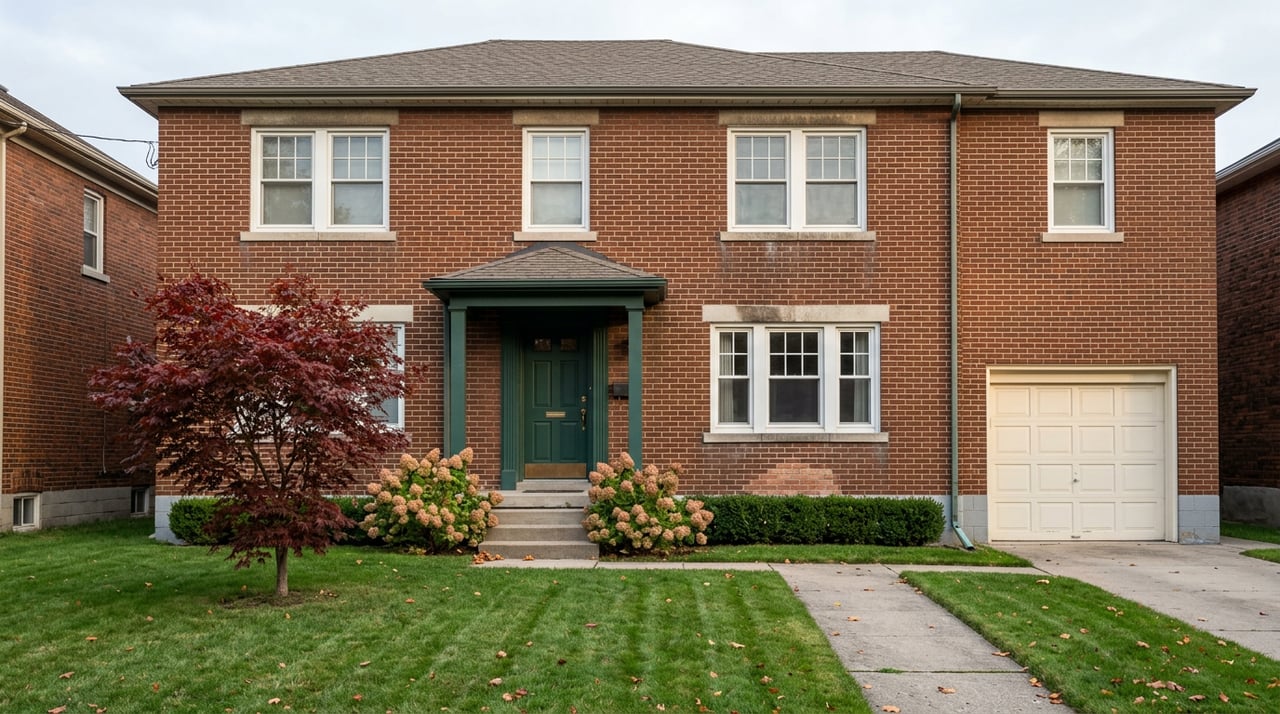
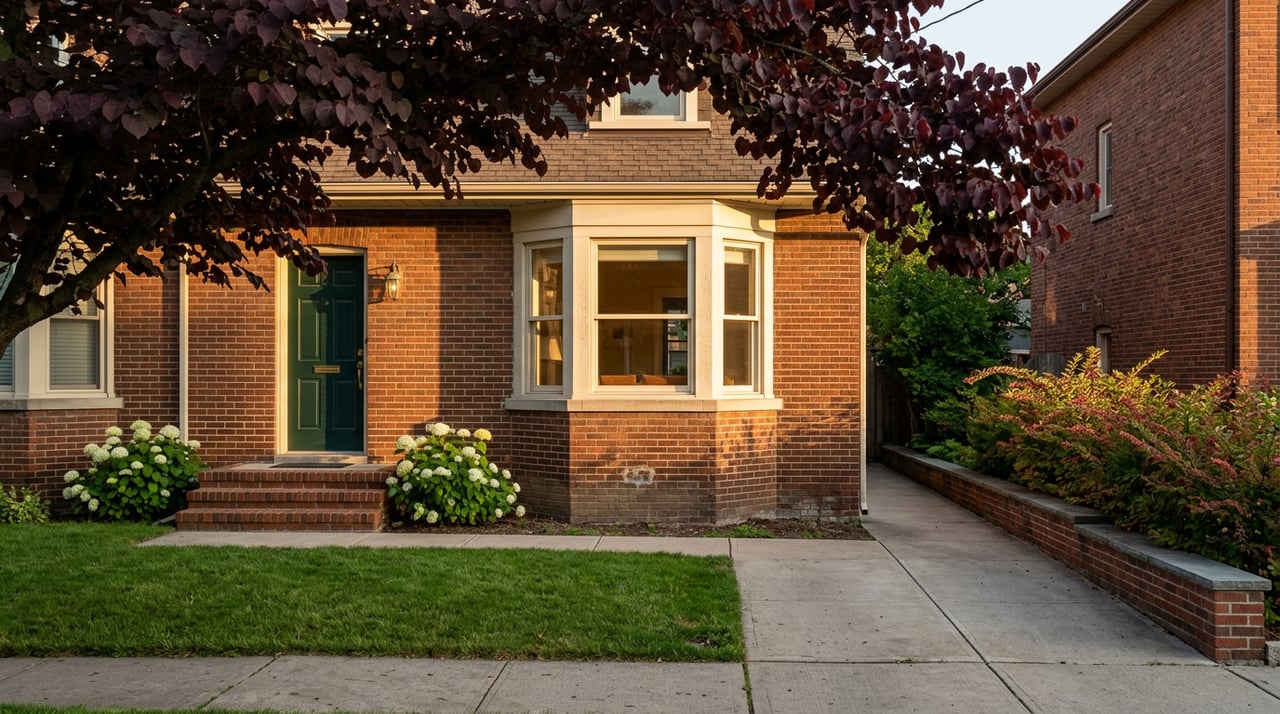
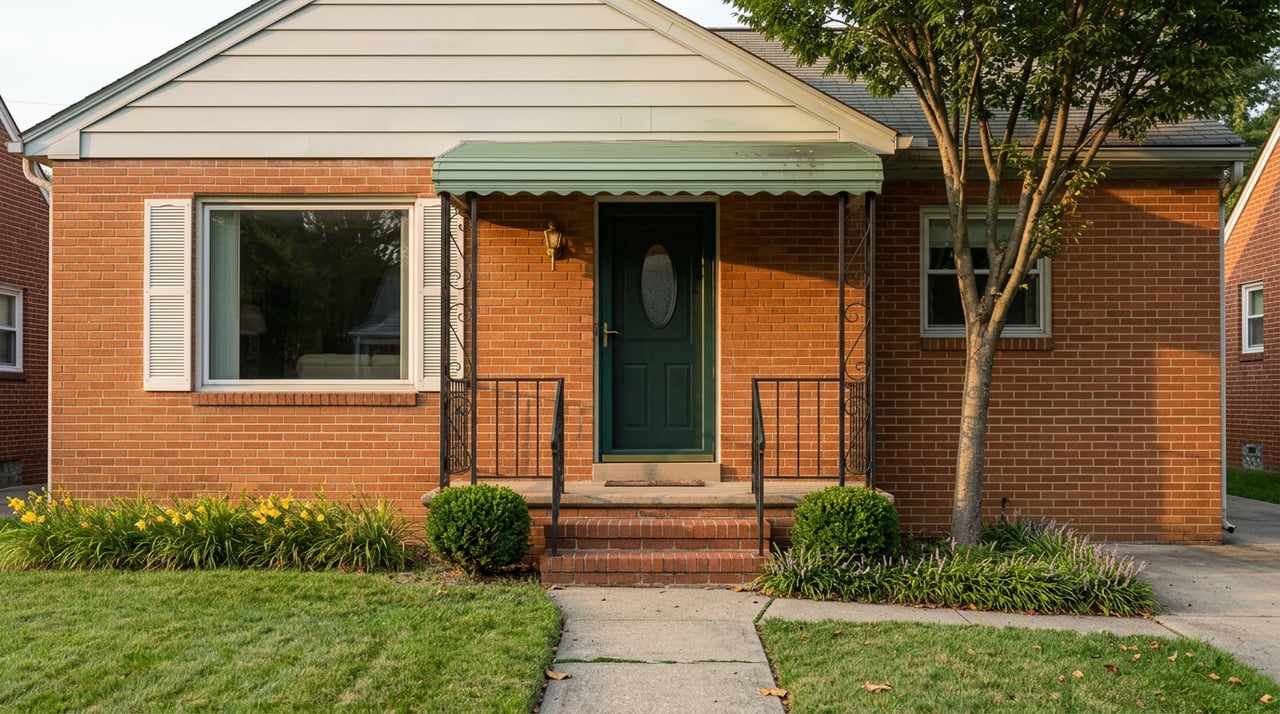
Most single-family houses here were built in the early-to-mid 20th century. You will see brick facades with practical prewar details, bungalow and Colonial influences, and some mid-century detached homes near Mill Basin. Many properties are semi-detached, and a fair number offer private or shared driveways.
Interiors commonly run 2 to 4 bedrooms with 1 to 2 baths plus a basement. Floor plans typically include a living room, dining room, and an eat-in kitchen. Renovation levels vary widely. Some homes feel largely original and need system upgrades, while others are fully updated and move-in ready. Finished basements add meaningful usable square footage, which can improve your price-per-usable-foot math even when the official square footage seems modest.
Lot sizes often show a standard city footprint of 25 feet by 100 feet. Wider parcels like 30 or 40 feet are around but are less common and carry a premium. Zoning on listing records frequently shows R3-2 for one-family parcels, which matters if you hope to expand later.
If you are benchmarking value, use more than one metric. Modeled neighborhood indexes show Marine Park around the low $800Ks for a typical home. Closed-sale medians often land in the high $700Ks. The difference usually comes down to methods and time windows.
Short-term movement has been modest. Local dashboards in late 2025 into early 2026 showed small positive or flat trends, with a few months of supply and days on market in the low-to-mid double digits. That points to a steady market where condition, lot width, and renovation quality drive premiums more than broad neighborhood swings.
In real-life searches, you are likely to encounter a wide band of prices. Smaller one-families that need work can start near the $600Ks. Renovated homes, wider lots, and detached houses with a private driveway can climb to $1.3M or more. Use neighborhood medians as a starting point, then lean on very recent, block-level comps for final price expectations.
Marine Park does not have a subway station within the interior of the neighborhood. Most commuters take a short bus ride to the B or Q lines at Kings Highway or Avenue U, or to the 2 or 5 at Flatbush Avenue–Brooklyn College. If you require a quick walk to a subway entrance, this may not be the right fit. If a 10 to 20 minute bus leg is workable, you will gain space and quiet in exchange.
For day-to-day needs, you will find local shops and restaurants along Avenue U and Flatbush Avenue. The regional mall, Kings Plaza, sits just a short drive away and covers big-box and seasonal needs. You can read more about the mall’s history and mix on the Kings Plaza overview on Wikipedia.
The signature amenity is Marine Park itself. The park features a large salt-marsh nature preserve, athletic fields, playgrounds, the Salt Marsh Nature Center, and an 18-hole public golf course. Different sources cite acreage ranging from roughly 530 to about 800 acres, depending on how parcels are counted. Explore the official NYC Parks page for Marine Park to get a feel for the trail map, fields, and programs.
Battery storage facility debate: A proposed lithium-ion battery site on Flatbush Avenue drew significant community attention in 2025. Neighbors expressed concerns about safety, emergency response, and adjacency impacts. If you are considering a home a few blocks from Flatbush Avenue, check the latest project status and community board updates. The Brooklyn Eagle summarizes the discussion: Local coverage of the battery-storage proposal.
Park brush fires and restoration: In late 2024 and early 2025, the park saw a spate of brush fires, linked in part to flammable invasive plants and dry conditions. Restoration efforts and replanting with native species are underway. If you are buying near the salt-marsh fringe, ask about recent mitigation and maintenance. Background here: Brush fires and park recovery reporting.
Flood and coastal context: Parts of the broader Jamaica Bay margin have coastal flood exposure. Whether a specific Marine Park address sits in a FEMA Special Flood Hazard Area depends on the exact parcel. Plan to run an address-level check and speak with your insurance agent about elevation and potential premiums. For regional context, see this coastal stewardship resource: NY-NJ coastal risk and stewardship context.
Use this quick list to focus your due diligence.
Lot and build potential
Flood and insurance
Commute test
Systems and basements
Block-level comps
Local projects and park edge
If you want the most house for the budget, prioritize features that boost long-term resale without overextending today.
Marine Park works well for buyers who want a calmer, single-family setting inside Brooklyn and who are comfortable with a short bus ride before the subway. If you are moving up from a condo or co-op and want your own yard, a basement, and maybe a driveway, it is worth a close look. If a five-minute walk to a subway is non-negotiable, you may prefer other neighborhoods.
Marine Park offers a real path to single-family living in Brooklyn without Mill Basin prices. You get a major park, a community feel, and a healthy spread of homes that range from starter one-families to renovated, wider-lot properties. The tradeoffs are longer commutes and the need to pay attention to block-level features and local dynamics. With sharp due diligence and a local guide, you can spot value and buy with confidence.
If you are ready to tour Marine Park homes or want to pressure test your budget and plan, reach out to the team at Revived Residential. We combine founder-level expertise with local insight so you can move forward with clarity.
Stay up to date on the latest real estate trends.
We are friendly, easy to talk to, and easy to understand. We’re not intimidating or judgmental — so clients from all walks of life feel comfortable talking to us about their real estate needs and concerns. Our messaging is warm, sincere, and familiar. We’re not money-driven.

Phone: (917) 459-7681
Email: [email protected]
Phone: (929) 379-3750
Email: [email protected]
2124 Flatbush Avenue
Brooklyn NY 11234
426 4th Avenue
Brooklyn NY 11215