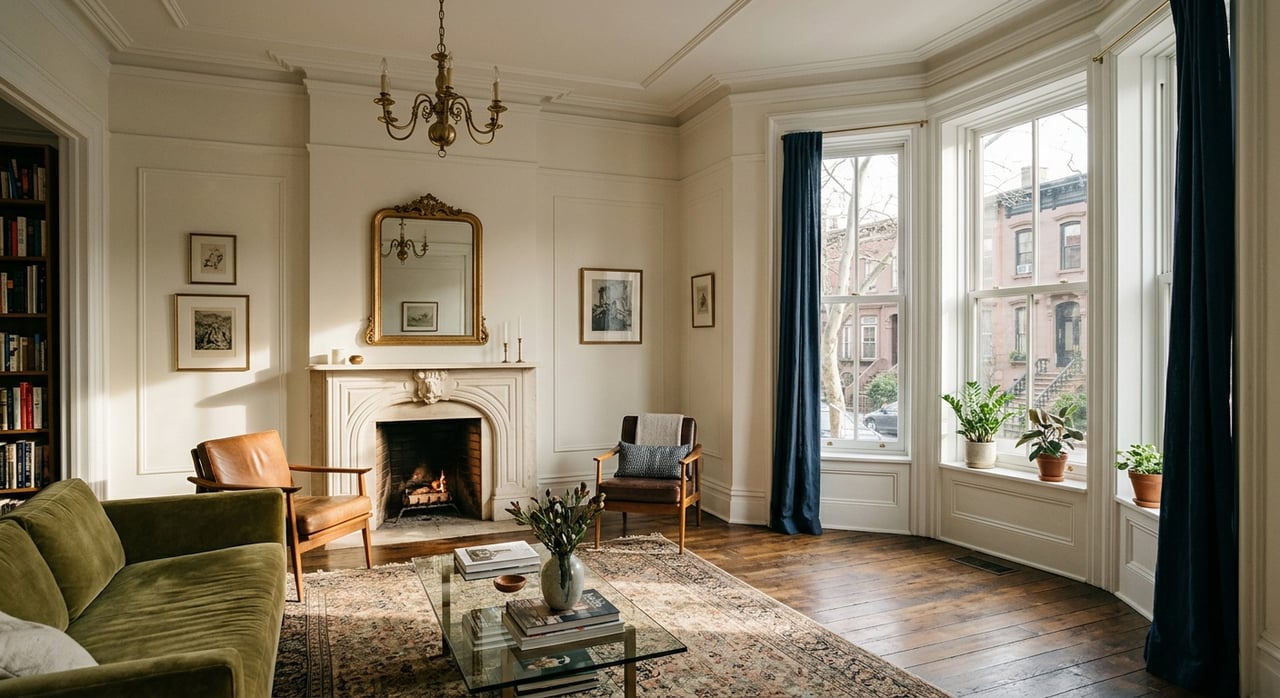
Carroll Gardens Brownstone Selling Guide: Timing Your Sale
April 2, 2026
April 2, 2026
Wondering when to sell your Carroll Gardens brownstone? In a neighborhood where inventory is limited, buyer demand can be intense, and preparation can take longer than expected, timing matters more than many sellers realize. If you want to balance price, speed, and a smoother process, it helps to plan your launch around both the market and the work your home may need. Let’s dive in.
Carroll Gardens is one of Brooklyn’s most expensive brownstone markets, with older housing stock, limited supply, and a buyer pool that often knows exactly what it wants. That combination can work in your favor, but it also means buyers tend to compare condition, layout, and presentation very closely.
Recent neighborhood data points to a market where demand is still meaningful, even as pricing and activity shift from year to year. According to Brownstoner’s Q1 2025 Brooklyn market roundup, Brooklyn home prices reached record highs in early 2025 while inventory rose year over year, and the prime brownstone group that includes Carroll Gardens posted an average price of $4.78 million in the first half of 2025, down 3% year over year, with closings up 12%.
That matters because the right sale window is not just about chasing the highest headline price. It is about bringing your home to market when buyers are active, your brownstone shows well, and your pricing strategy reflects current conditions.
For many Carroll Gardens sellers, late winter preparation followed by a late-February or early-March launch is the strongest plan. StreetEasy’s citywide timing analysis found that the first week of March tends to be the best time to list in New York City for both speed and strong proceeds.
The same analysis found that spring listings receive 36.5% more buyer inquiries than homes listed in autumn and early winter. It also reported that spring listings go into contract about 27 days faster, while homes listed after Labor Day sit 14 days longer than similar listings at other times of year.
For a Carroll Gardens brownstone, that seasonal pattern is especially relevant. Buyers shopping here are often focused on scarce townhouse inventory, so when your home hits the market during a period of stronger activity, you may benefit from more attention early in the listing cycle.
An early-spring launch gives you a chance to meet buyers when they are actively planning moves and watching new inventory closely. It also gives your marketing a better chance to build momentum before the market gets more crowded later in the season.
In a neighborhood with limited inventory, the first days and weeks on market can shape the entire sale. When you list at a time when buyers are already engaged, you improve your odds of stronger inquiry volume and better price discovery.
If you miss the spring window, early fall can still work, but only if your home is fully ready to go. The key is to avoid a rushed launch and to understand that seasonal data favors getting ahead of the post-Labor Day inventory surge rather than reacting to it.
If your brownstone needs repairs, styling, photography, or permit-related work, waiting until the home is truly market-ready may be smarter than forcing a date. In Carroll Gardens, presentation and timing work best when they support each other.
Even outside the classic spring selling window, Carroll Gardens has shown strong buyer interest. During the September through November 2024 period, StreetEasy reported that the typical Carroll Gardens listing saw 2.21 times the buyer inquiry volume of the citywide average.
That is an important reminder: this is a neighborhood buyers actively watch. Brooklyn homes entering contract during that same period spent a median of 59 days on market, which shows that serious buyers were still making moves.
The neighborhood’s appeal helps explain that demand. StreetEasy describes Carroll Gardens as a neighborhood with limited inventory and a buyer pool drawn to private outdoor space, townhouse layouts, and updated finishes. For brownstone sellers, that means the market often rewards homes that combine classic architecture with practical livability.
Not every brownstone should be listed on the same timeline. A turnkey home and a project-level property may attract different buyers, respond to different pricing strategies, and require different preparation plans.
Brooklyn buyers often pay a premium for move-in readiness. According to Brown Harris Stevens, renovated properties in Brooklyn can command significant premiums, and newer homes sold for much more than older inventory citywide in its 2025 analysis.
At the top end of the market, standout renovations can make a major difference. Brownstoner’s roundup of Brooklyn’s biggest 2024 sales included a Carroll Gardens brownstone that sold for $11.25 million after a luxury renovation with high-end finishes and major lifestyle features.
If your brownstone is already updated, well-maintained, and visually polished, you may be in a better position to target that late-winter to early-spring launch. In that case, your focus should be on small refinements, staging, pricing, and marketing assets like strong photography and floor plans.
A ready home gives you flexibility. You can time the listing around market demand instead of around construction schedules.
If your home needs paint, repairs, decluttering, or cosmetic touch-ups, create a short, realistic prep plan. Minor improvements can help buyers see value more clearly, but only if the work is done efficiently and finished before your listing goes live.
This is where many sellers lose time. They start with a quick refresh, then drift into bigger decisions that delay the launch without adding enough value.
If your brownstone needs substantial renovation, the question is not just when to list. It is also whether you should sell as-is, complete selective improvements, or pursue larger upgrades before going to market.
That decision matters in Carroll Gardens because historic district rules can affect your timeline.
Carroll Gardens Historic District was designated in 1973, and many exterior changes to front and rear facades require review by the Landmarks Preservation Commission. According to the LPC historic district materials, ordinary repairs such as replacing broken window glass or repainting to match the existing color generally do not need a permit, but most visible facade alterations do.
For sellers, this is one of the biggest timing mistakes to avoid. If your pre-list plan includes new windows, facade changes, or other visible exterior work, you may need more runway than you think.
A simple rule helps here: separate cosmetic refreshes from permit-heavy upgrades. If the work could trigger review or approval, build that into your schedule early instead of assuming it can be finished quickly.
If you have a 12-month horizon, a winter prep cycle with an early-spring launch is often the cleanest path. That approach gives you time to make decisions without losing the seasonal advantage supported by market data.
Here is a practical way to think about the timeline:
| Timeline | Priority |
|---|---|
| Late fall to early winter | Review recent comps, discuss pricing strategy, assess condition |
| Winter | Complete repairs, declutter, refresh finishes, plan photography and marketing |
| Late February to early March | Launch if the home is fully ready |
| Early fall fallback | List only if preparation is complete and pricing is sharp |
This kind of plan can help you avoid the most common problem in townhouse sales: starting too late and then compromising on either timing or presentation.
The best time to sell your Carroll Gardens brownstone depends on three things working together:
If all three align, you are in a stronger position to attract serious buyers and negotiate from a place of confidence. If one is off, such as unfinished prep or pricing that does not match current buyer expectations, even a good season may not deliver the result you want.
That is why timing should never be treated as a calendar decision alone. In Carroll Gardens, it is really a strategy decision.
If you are considering a sale, start earlier than you think you need to. Review the property honestly, look at comparable brownstones, and decide whether your home should be positioned as turnkey, lightly updated, or a project opportunity.
That clarity can shape everything that follows, from your launch date to your marketing plan to your pricing conversation. At Revived Residential, we believe the best outcomes come from pairing local market context with a practical, property-specific strategy, so you can list at the right time for your goals.
Stay up to date on the latest real estate trends.
We are friendly, easy to talk to, and easy to understand. We’re not intimidating or judgmental — so clients from all walks of life feel comfortable talking to us about their real estate needs and concerns. Our messaging is warm, sincere, and familiar. We’re not money-driven.

Phone: (917) 459-7681
Email: [email protected]
Phone: (929) 379-3750
Email: [email protected]
2124 Flatbush Avenue
Brooklyn NY 11234
426 4th Avenue
Brooklyn NY 11215