Best Brooklyn Neighborhoods for a Midtown Commute
April 23, 2026
April 23, 2026
If you need to get to Midtown without turning your day into a marathon, where you live in Brooklyn matters a lot. The right neighborhood can mean a one-seat ride to a major Midtown hub, while the wrong block can add a longer walk, a transfer, and more daily stress. If you are trying to balance commute time with the kind of home and neighborhood feel you want, this guide will help you compare the tradeoffs. Let’s dive in.
The biggest factor is not just the neighborhood name. It is whether you have a direct train to the part of Midtown where you actually work.
According to MTA subway line maps, Midtown West commuters usually have the easiest trips from neighborhoods with direct F, R, N, D, A, or C service. For Midtown East, the 4, 5, 6, or 7 corridors are often more convenient, especially if your destination is near Grand Central.
That is why one neighborhood can feel perfect for one buyer and less practical for another. A direct ride to 34 St-Herald Sq, Times Sq-42 St, or Grand Central-42 St usually beats a longer trip with a transfer.
If your top priority is the shortest commute in this group, Downtown Brooklyn and nearby Brooklyn Heights are hard to ignore. A city planning report describes Downtown Brooklyn as one of the borough’s strongest transit zones, with broad subway access and Atlantic Terminal as a major transit hub with subway and LIRR connections.
A weekday 4 train timetable shows Atlantic Av-Barclays Ctr to Grand Central-42 St in about 25 minutes, based on the official planning and MTA materials summarized in the research. For many Midtown East commuters, that makes this area one of the most practical choices in Brooklyn.
Housing here also comes with variety. Downtown Brooklyn leans more transit-dense and apartment-heavy, while Brooklyn Heights offers a more historic rowhouse and tower-in-context setting next to the business district. If you want a fast ride without leaving Brooklyn’s classic architectural character behind, this pairing deserves a close look.
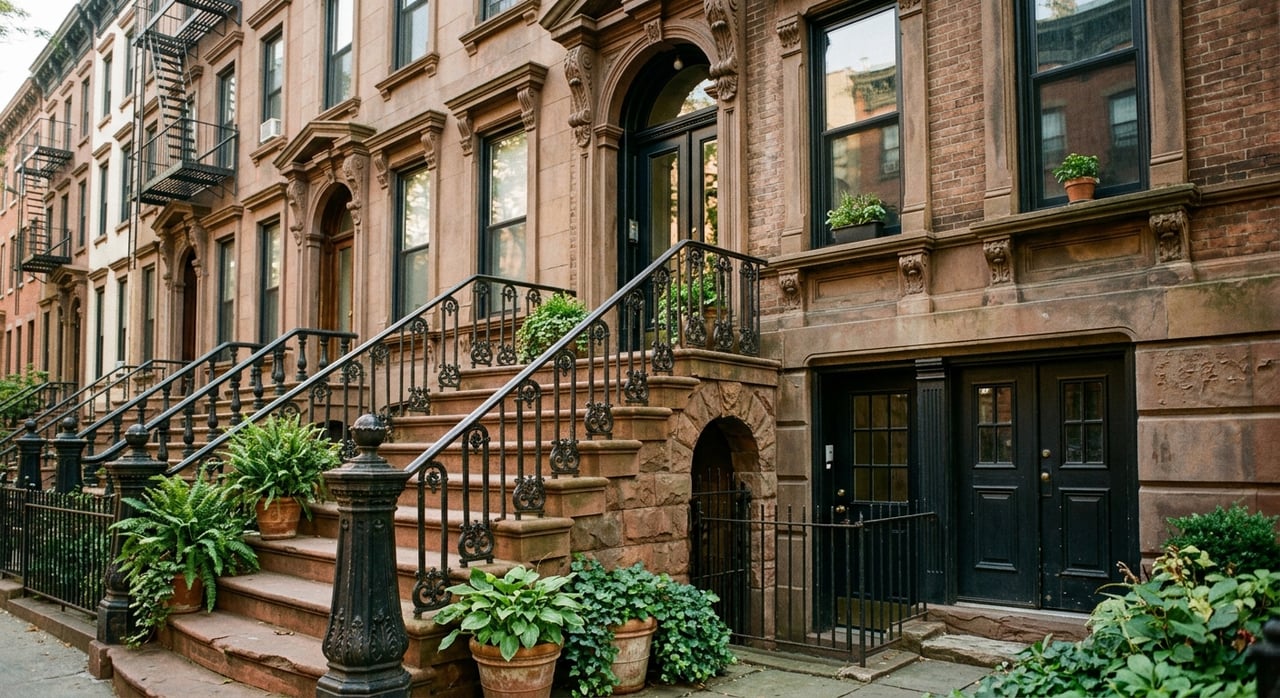
Fort Greene and Boerum Hill often hit a sweet spot for buyers who want a strong commute and a more classic brownstone Brooklyn setting. City planning materials describe Fort Greene with row houses, apartment buildings, offices, local retail, and community facilities, while Boerum Hill is similarly low-rise with rowhouses, loft buildings, and apartment stock.
Transit is the key reason these neighborhoods stay on so many Midtown shortlists. The Atlantic Avenue-Pacific Street area adds extensive subway access plus LIRR, and Bergen Street expands coverage with the F and G nearby.
A practical Midtown estimate from the core of these neighborhoods is often in the 20 to 30 minute range, based on the transit access and MTA service patterns in the research. In real life, your exact block matters. Being closer to Atlantic Terminal or another major station can make a noticeable difference in your daily routine.
If you picture Brooklyn as tree-lined blocks, rowhouses, and a manageable train ride to Manhattan, Park Slope often fits that vision. City planning documents describe side streets that are primarily rowhouse territory, with mixed-use multifamily buildings and retail concentrated along Fourth and Fifth Avenues.
For commuting, the neighborhood has a practical edge. The F train timetable shows 4 Av-9 St to 34 St-Herald Sq in about 21 minutes on a weekday run, which puts parts of Park Slope into realistic sub-30-minute territory for Midtown West.
That combination is what makes Park Slope stand out. You get a neighborhood known for classic housing stock, but you are not giving up a workable weekday commute to get it.
Carroll Gardens appeals to buyers who want a distinctly low-rise streetscape and classic rowhouse character. City planning materials describe it as predominantly three- and four-story single- and multi-family row houses with front yards, plus a smaller number of apartment buildings.
The commute story here is straightforward. The neighborhood is served by the F and G, with service running below and along Smith Street, so many Midtown trips are direct, especially if your destination is closer to Herald Square or Penn.
In practice, commute times are often in the mid-20s to mid-30s minutes depending on your exact location and final destination, based on the research report’s transit analysis. For many buyers, that is a fair trade for the neighborhood’s lower-rise feel and brownstone appeal.
Bay Ridge belongs in this conversation for a different reason. It is not the shortest commute option, but it offers a clear space-for-time tradeoff.
Official planning documents describe a lower-rise residential environment with three-story rowhouses, surrounding row houses, and multi-family apartment buildings. The R train runs from Bay Ridge-95 St through major Brooklyn and Midtown stops, and a weekday MTA timetable shows Bay Ridge-95 St to Times Sq-42 St in about 55 minutes.
For some buyers, that longer ride is worth it. If you care more about a lower-rise neighborhood setting and are comfortable spending more time on the train, Bay Ridge can make sense in a way that a purely commute-first neighborhood may not.
The best neighborhood for your Midtown commute depends on what you are optimizing for. Some buyers want the fastest possible trip. Others are willing to add 10 or 20 minutes if it means getting a different kind of home or block.
Here is a simple way to think about it:
This framework comes from the transit maps and official neighborhood housing descriptions in the research. It is less about one perfect answer and more about choosing the tradeoff that fits your day-to-day life.
Even within the same neighborhood, your commute can change a lot based on where you live. In rowhouse-heavy areas especially, being closer to the main station or avenue can materially shorten your door-to-door trip.
That is one reason broad neighborhood advice only goes so far. Two homes in the same area can offer very different weekday experiences if one is a quick walk to the train and the other adds extra time before you even tap in.
When you are comparing Brooklyn neighborhoods for a Midtown commute, it helps to evaluate the route from the specific address, not just the ZIP code. That level of detail often gives you the clearest answer.
A lot of buyers say they work in Midtown as if that is one destination. It is not. Midtown East and Midtown West can point you toward different train priorities.
As shown on the MTA 4 line map, Grand Central-42 St sits on the 4/5/6/7 corridor, while Times Sq-42 St and 34 St-Herald Sq connect more directly with major west-side lines. That means a neighborhood that feels ideal for one office location may be less convenient for another.
Before you narrow your list, it helps to define your actual destination first. That one step can save you from choosing a neighborhood based on a commute that looks good on paper but feels less efficient in practice.
If you are deciding between Brooklyn neighborhoods, start with the commute you can live with every day. Then compare what kind of housing stock matches your goals.
In general, neighborhoods closer to the East River transit spine tend to be more apartment-heavy and transit-dense. Park Slope and Carroll Gardens sit more in the middle, with classic rowhouse housing and workable access, while Bay Ridge offers a stronger lower-rise residential feel with the longest ride in this group.
If you want help weighing those tradeoffs at the property level, Revived Residential can help you compare neighborhoods, housing types, and commute realities with a local, practical lens.
Stay up to date on the latest real estate trends.
We are friendly, easy to talk to, and easy to understand. We’re not intimidating or judgmental — so clients from all walks of life feel comfortable talking to us about their real estate needs and concerns. Our messaging is warm, sincere, and familiar. We’re not money-driven.

Phone: (917) 459-7681
Email: [email protected]
Phone: (929) 379-3750
Email: [email protected]
2124 Flatbush Avenue
Brooklyn NY 11234
426 4th Avenue
Brooklyn NY 11215