Single-Family Or Multi-Family Living On Staten Island?
June 25, 2026
June 25, 2026
Trying to choose between a single-family home and a multi-family property on Staten Island? That decision can shape your monthly costs, your day-to-day privacy, and your long-term flexibility more than almost anything else in your search. If you are looking around Howland Hook and the wider North Shore or West Shore areas, it helps to know that Staten Island offers a real mix of housing types, not just one style of ownership. This guide breaks down the practical trade-offs so you can decide what fits your goals best. Let’s dive in.
Staten Island stands out within New York City for one big reason: it is the borough with the strongest owner-occupied profile. According to the U.S. Census Bureau’s 2019-2023 QuickFacts, the owner-occupied housing unit rate in Richmond County is 67.9%, with a median owner-occupied home value of $658,500 and a median gross rent of $1,689.
That matters because many buyers here are not thinking only about short-term housing. They are often weighing space, long-term use, and future resale, while also asking whether rental income could help offset carrying costs. In other words, on Staten Island, the single-family versus multi-family question is often about lifestyle and financial strategy.
If you are focused on Howland Hook, you are looking at an area shaped by more than residential blocks alone. City planning materials place Howland Hook within a logistics and maritime corridor tied to the Howland Hook Marine Terminal and Arlington Yard.
That broader land-use context can affect how you think about your purchase. For some buyers, it may make a simpler owner-occupied setup more appealing. For others, the mixed character of nearby North Shore and western-adjacent areas may support a two-family or three-family property with flexible long-term use.
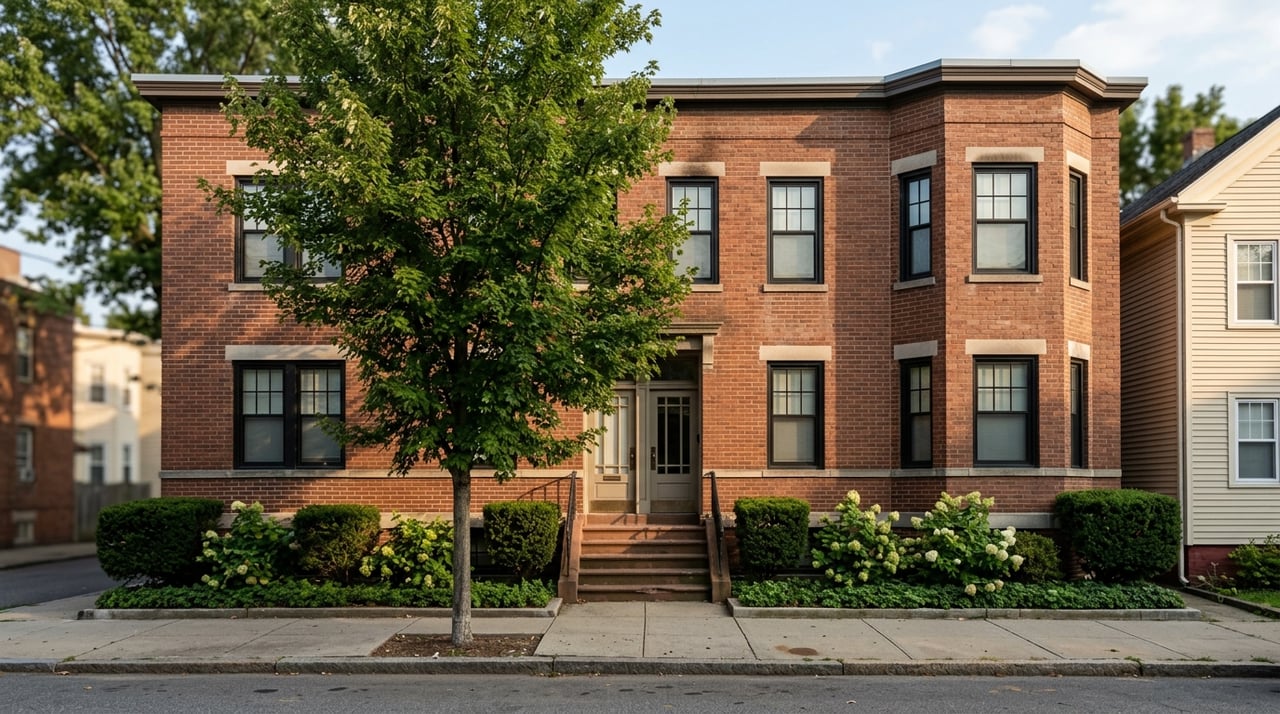
A lot of buyers picture a detached house when they hear “single-family,” but in New York City, that is not the only option. The city’s building-class system includes several one-family forms, including detached, semi-detached, attached, townhouse-style, and other one-family layouts.
That means your Staten Island single-family search may include more variety than you expect. A one-family home could be a detached A1-style property, a semi-detached or attached A5-style home, or another one-family type such as A0, A4, or A7.
A single-family home usually appeals to buyers who want a more straightforward ownership experience. You are typically managing one household, one set of living spaces, and fewer moving parts.
Some of the biggest benefits include:
For many buyers, especially those planning to live in the home long term, that simplicity is hard to beat.
On Staten Island, small multi-family ownership often means a two-family or three-family home rather than a larger apartment building. Common building classes include B1 and B2 for two-family properties, B3 for converted-from-one-family two-families, and C0 for three-family properties.
In many lower-density districts, two-family homes are designed with one unit above or below the other. That is why many Staten Island multi-family properties feel more like stacked homes than large rental buildings.
A small multi-family property can make sense if you want help with monthly carrying costs or more flexibility over time. If one unit is rented, that income may help offset expenses while you occupy another part of the building.
Many buyers are drawn to multi-family living for reasons like:
That upside is real, but it comes with more responsibility.
One of the most important differences on Staten Island is not just the floor plan. It is the tax class.
According to the NYC Department of Finance, one- to three-unit residential properties fall into Class 1. Residential properties with more than three units fall into Class 2. That means a one-family, two-family, or three-family home is still treated as Class 1, while a four-plus-unit building is taxed and assessed differently.
For many buyers, this is the key dividing line. A two-family or three-family property may give you rental income potential while still staying within the same broad property tax class as a one-family home.
Class 1 also comes with an important assessment protection. The assessed value of a Class 1 property cannot increase by more than 6% in one year or 20% over five years unless there is a physical change to the property.
For buyers who want more stability, that can be a meaningful factor. It is one reason many Staten Island buyers look closely at one-, two-, and three-family homes before considering buildings with four or more units.
If you are deciding between single-family and multi-family in or around Howland Hook, the North Shore offers a useful picture of how mixed the housing stock can be. NYC Planning’s North Shore 2030 report says the North Shore study area stretches from St. George to Howland Hook and is twice as dense as the rest of Staten Island.
That density shows up in the housing mix. Planning materials for the Bay Street Corridor note that R3-2 districts can allow low-rise attached townhouses, small multi-family apartment houses, and detached or semi-detached one- and two-family residences.
In plain terms, you can move just a few blocks and see very different ownership options. That makes it especially important to judge each property not only by price, but by layout, block context, and your long-term plan.
Sales records from 2024 help show this mix in action. In Port Richmond, there were one-family sales coded A1 and A5, along with at least one two-family B2 sale. In Mariners Harbor, there were A5 one-family sales and a C0 three-family sale. In Port Ivory, there were A1 one-family sales along with B2 and B3 two-family sales.
For buyers near Howland Hook, that is useful because it confirms the area is not locked into one housing type. You may find a one-family home that offers privacy and yard space, or a two-family or three-family property that creates income potential and flexible occupancy.
If your main goal is straightforward homeownership, a single-family property often checks the right boxes. You usually get a cleaner living setup, fewer shared systems between households, and less coordination around maintenance and occupancy.
This can matter even more in areas with lower-density residential patterns. City zoning guidance notes that some West Shore districts lean toward detached or semi-detached one- and two-family forms, and R2 districts are designated for single-family detached homes.
For many owner-occupants, that trade-off is worth paying for.
If your budget feels tight or you want the property to work harder financially, a two-family or three-family home may be the smarter move. Rental income can help soften monthly carrying costs, and some buyers value the option to adapt the property over time.
That said, multi-family ownership is more active. When more than one household lives on the property, repairs, turnover, and compliance responsibilities usually increase too.
This route can be powerful, but only if you are comfortable with the extra work that comes with it.
On parts of the North Shore, housing conditions are a real part of the conversation. In Port Richmond, neighborhood health data reported that 46.9% of renter-occupied homes had at least one health-related housing problem in 2017, and 52.3% of renter households were rent-burdened in 2017-2021.
These figures are neighborhood-specific, not universal across Staten Island. Still, they show why buyers of older multi-unit properties should pay close attention to upkeep, repair planning, and the real cost of maintaining housing for more than one household.
If part of your strategy involves creating extra rental space, accessory dwelling unit rules may matter. NYC Buildings says a one-family home can add an above-grade ADU or a detached ADU, and a two-family home can add a fire-wall-separated ADU in some cases.
But there is an important limit for parts of Staten Island. Basement and cellar ADUs are prohibited in flood-risk areas, which can be especially relevant in shoreline locations.
If you are considering a property near the water or in an area with site-specific flood concerns, this is not a small detail. It can directly affect how realistic your income plan is.
If you are deciding between single-family and multi-family living around Howland Hook, the best answer usually comes down to what you need the property to do for you.
Choose a single-family home if your priority is privacy, simpler ownership, and a home-centered lifestyle. Choose a two-family or three-family property if your priority is rental offset, flexibility, and a more active ownership role.
In this part of Staten Island, block-by-block differences matter. Housing type, surrounding land use, zoning context, and shoreline constraints can all shape whether a property feels like the right fit.
A smart search is not just about asking what is available. It is about asking which ownership model supports the way you want to live and spend over the next several years.
If you want practical guidance on buying in Staten Island, the team at Revived Residential can help you compare property types, understand neighborhood context, and make a decision that fits your goals.
Stay up to date on the latest real estate trends.
We are friendly, easy to talk to, and easy to understand. We’re not intimidating or judgmental — so clients from all walks of life feel comfortable talking to us about their real estate needs and concerns. Our messaging is warm, sincere, and familiar. We’re not money-driven.

Phone: (917) 459-7681
Email: [email protected]
Phone: (929) 379-3750
Email: [email protected]
2124 Flatbush Avenue
Brooklyn NY 11234
426 4th Avenue
Brooklyn NY 11215